Was there a Trojan War?

This entry is part 6 of 49 in the series Hellenes Greek History and Mythology

Hellenes Greek History and Mythology
hellenes

Who were the Hellenes?

Minotaur

Theseus and the Minotaur

minos

The Palace of Minos

troy

Helen of Troy

hector

The Wooden Horse

Trojan

Was there a Trojan War?

migration

The Migration

city-states

City-States and Colonies

delphic oracle

The Delphic Oracle

olympic games

The Olympic Games

sparta

Sparta

A Spartan grows Up

athens

Athens

Solon

tyrant

A Tyrant Who Was Not Tyrannical

Athenian Democracy

ionian greeks

The Ionian Greeks

marathon

Marathon

athenian

The Rivals

xerxes

The Second Persian Invasion

Thermopylae

Persian Soldier

“Wooden Walls” and Salamis

aeschylus

Aeschylus

theseus

Theseus Comes Home

delos

The Confederacy of Delos

The Athenian Empire

herodotus

Herodotus, The Father of History

parthenon today

The Parthenon

Thucydides

Thucydides

Athens fight Sparta

Why Did Athens Fight Sparta

The Peloponnesian War

The Peloponnesian War Begins

athenians and death

Athenian Death

Hippocrates and Disease

pericles dies plague

Pericles Dies

Cleon Tanner

Cleon the Tanner

peace

Peace

Socrates

Socrates

Alcibiades

Alcibiades

Hermes, Sicily

Sicily

Hecuba, Queen of Troy

Hecuba, Queen of Troy

Decelea

Decelea, a Thorn in the Flesh

oligarchy

Oligarchy and Athens in Defeat

socrates' death

Socrates’ Death

xenopon

Xenophon

damocles' sword

Damocles’ Sword – The Fourth Century

Plato

Plato

Alexander of Macedon

Alexander of Macedon

Old Europe Crumbles (451 – 520 A.D.)

Hellenistic Age – Alexandria and Byzantium

Hellenistic Age – Alexandria and Byzantium

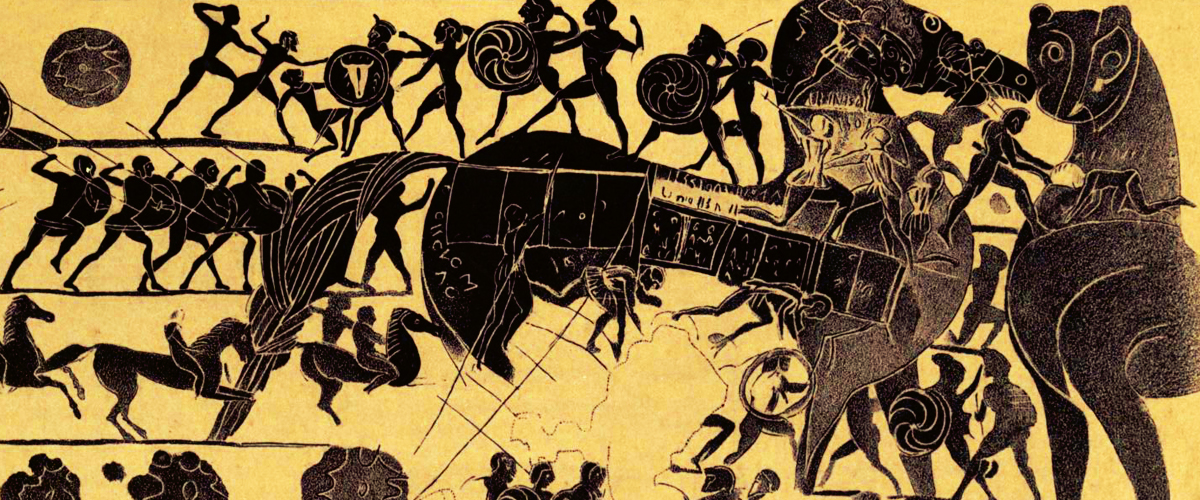
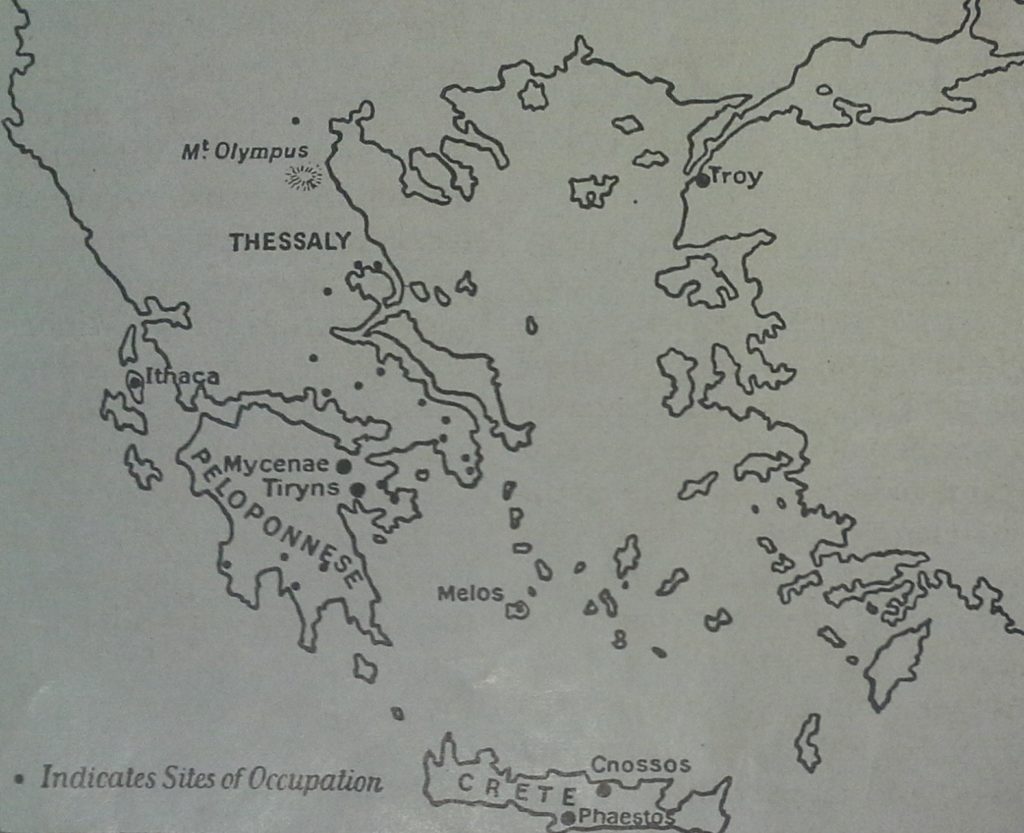
Parts of the story of the Trojan War are told in two poems the Iliad (Ilium = Troy) and the Odyssey (Odysseus was one of the Greek Generals) by Homer, the earliest Greek poet. A hundred years ago the war was regarded as a legend, but a German-American, Heinrich Schliemann, who had learned to love Homer as a boy and became immensely rich, determined to try and find Troy by digging. He succeeded, in 1871 and later proceeded to excavate Mycenae. He made many mistakes, but his work and the work of those who followed him have made it possible to answer ‘Yes’ to the question ‘Was there a Trojan War?’

We now know that from about 2500 B.C. a number of great cities existed on the site of Troy, each one built on top of the ruins of its predecessor.

The sixth city was built about 1500 B.C. and its destruction by the Greeks is now thought to have taken place about 1180 B.C., that is, about the time when the great days of Mycenae were coming to an end.

We know nothing at all about the course of the war, but its cause may well have been a quarrel over Black Sea trade. Troy’s position naturally tempted her to try and exact tribute from ships passing through the Hellespont.

Homer and the archaeologists thus give us some sort of picture of the Greeks in about 1200 B.C., but after the end of the Trojan War we enter a period of several centuries about which neither legends nor written accounts nor archaeologists can tell us very much.

Hellenes Greek History and Mythology
The Wooden Horse The Migration