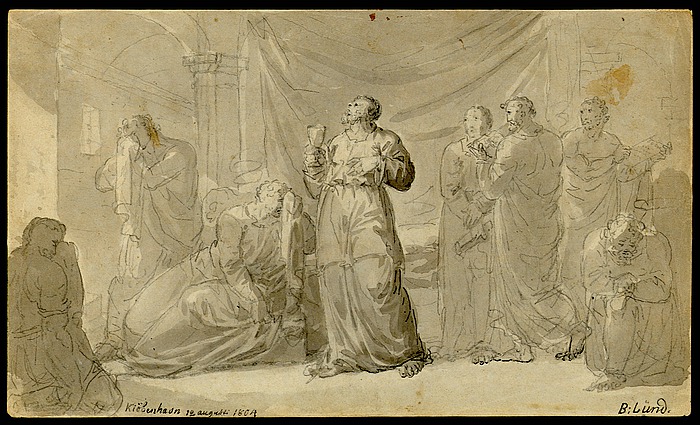
Socrates’ Death

This entry is part 43 of 49 in the series Hellenes Greek History and Mythology

Hellenes Greek History and Mythology
hellenes

Who were the Hellenes?

Minotaur

Theseus and the Minotaur

minos

The Palace of Minos

troy

Helen of Troy

hector

The Wooden Horse

Trojan

Was there a Trojan War?

migration

The Migration

city-states

City-States and Colonies

delphic oracle

The Delphic Oracle

olympic games

The Olympic Games

sparta

Sparta

A Spartan grows Up

athens

Athens

Solon

tyrant

A Tyrant Who Was Not Tyrannical

Athenian Democracy

ionian greeks

The Ionian Greeks

marathon

Marathon

athenian

The Rivals

xerxes

The Second Persian Invasion

Thermopylae

Persian Soldier

“Wooden Walls” and Salamis

aeschylus

Aeschylus

theseus

Theseus Comes Home

delos

The Confederacy of Delos

The Athenian Empire

herodotus

Herodotus, The Father of History

parthenon today

The Parthenon

Thucydides

Thucydides

Athens fight Sparta

Why Did Athens Fight Sparta

The Peloponnesian War

The Peloponnesian War Begins

athenians and death

Athenian Death

Hippocrates and Disease

pericles dies plague

Pericles Dies

Cleon Tanner

Cleon the Tanner

peace

Peace

Socrates

Socrates

Alcibiades

Alcibiades

Hermes, Sicily

Sicily

Hecuba, Queen of Troy

Hecuba, Queen of Troy

Decelea

Decelea, a Thorn in the Flesh

oligarchy

Oligarchy and Athens in Defeat

socrates' death

Socrates’ Death

xenopon

Xenophon

damocles' sword

Damocles’ Sword – The Fourth Century

Plato

Plato

Alexander of Macedon

Alexander of Macedon

Old Europe Crumbles (451 – 520 A.D.)

Hellenistic Age – Alexandria and Byzantium

Hellenistic Age – Alexandria and Byzantium

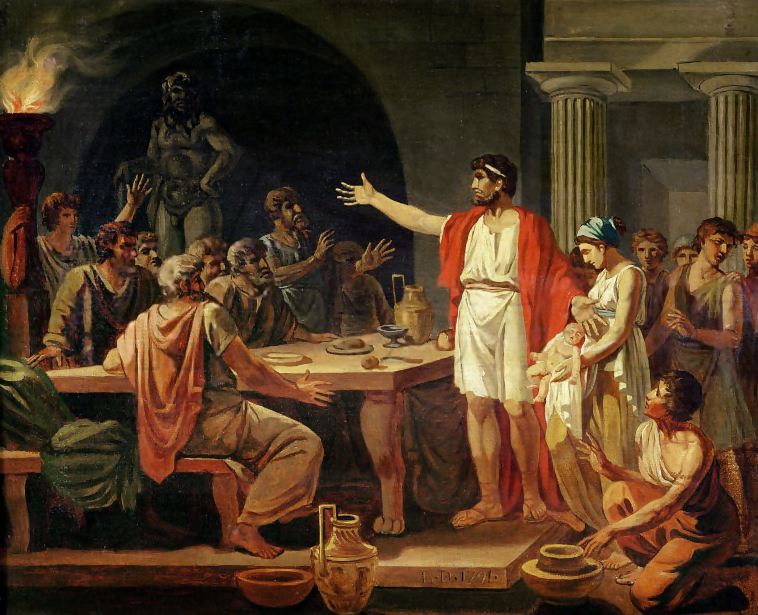
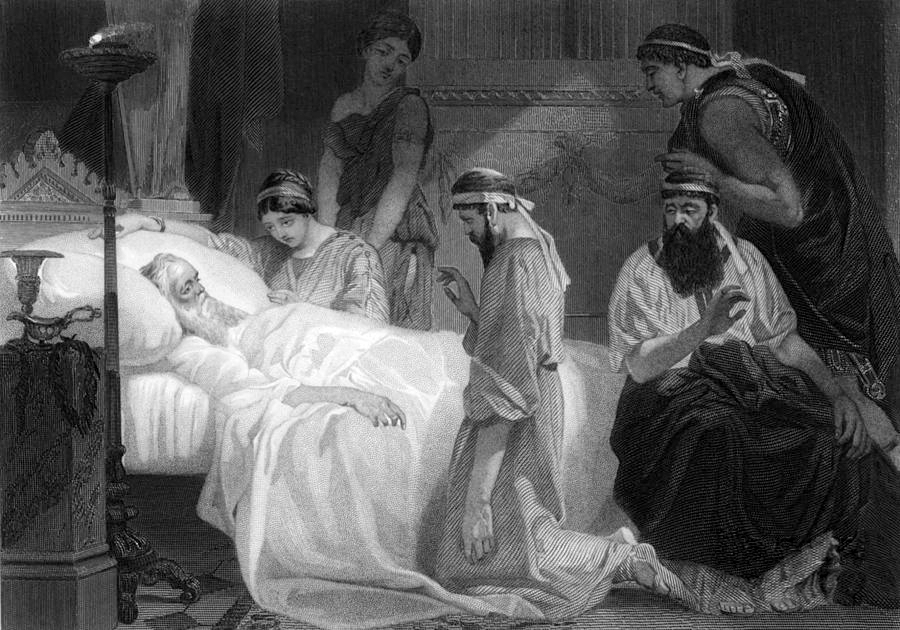
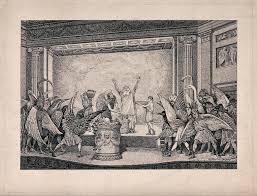
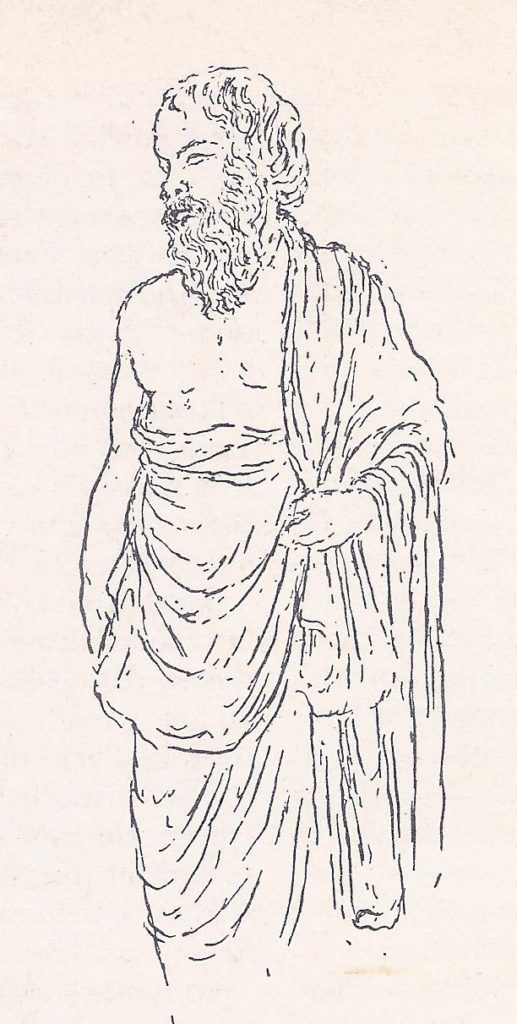
Socrates’ death occurred in the year 399 an Athenian court condemned Socrates for opposing the official religion of the state, a practice which in fact he studiously avoided and for “corrupting the youth”, which simply meant that he tried to get young people to think things out instead of yapping slogans. When the penalty was being discussed, Socrates said that, far from being punished, he thought he ought to be given free dinners for life in return for his services to the state. This independent line did not incline the court towards leniency and they were not interested when Socrates then offered to pay a fine. They condemned him to death.

Socrates’ death by execution was dignified. Socrates was handed a cup of hemlock. He put it to his lips without trembling. He was not afraid of death, though he did not know what it might have in store for him. True to his often repeated maxim that our only certain knowledge is the knowledge of our own ignorance, he kept an open mind to the end. “Whether life or death is better, is known to God and to God only”, he said.

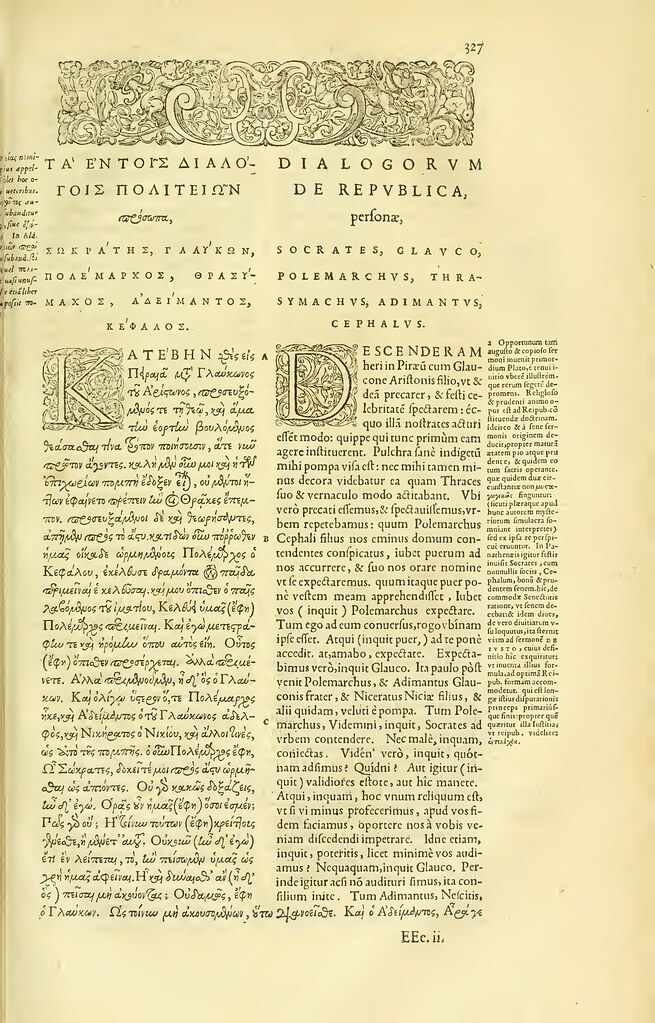
“Thus died the man, who of all with whom we were acquainted was in death the noblest, in life the wisest and most just.” Those two quotations are from Plato (the first from the Apology, the second from the Phaedo).

Hellenes Greek History and Mythology
Oligarchy and Athens in Defeat Xenophon