Hellenes Greek History and Mythology

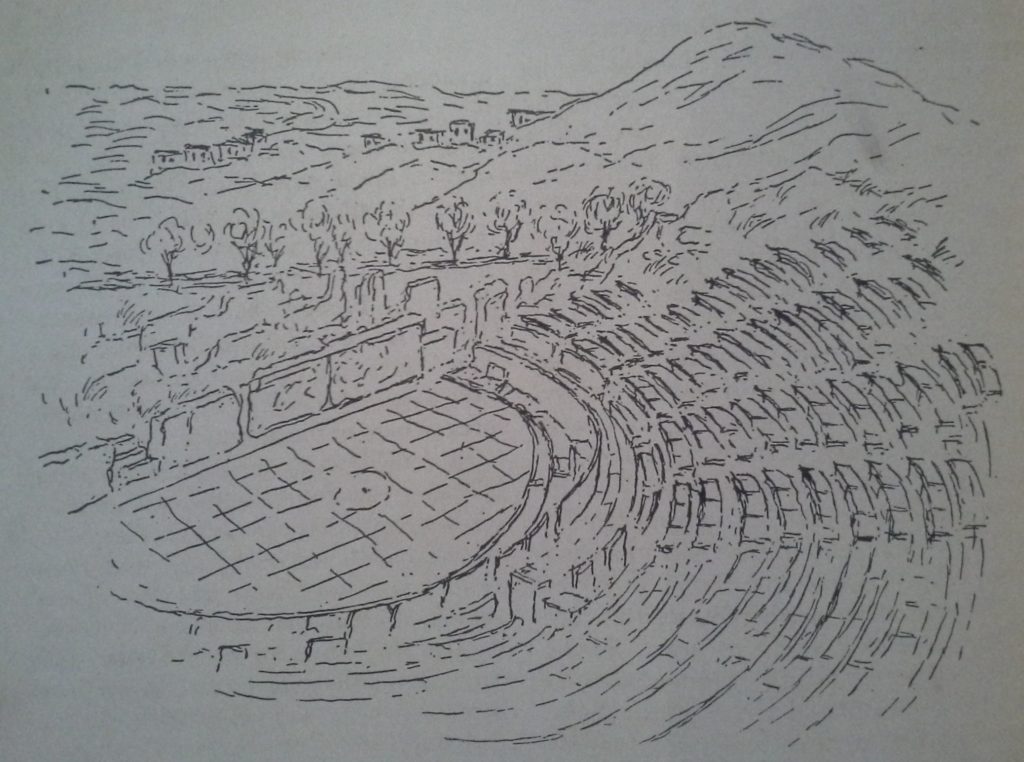

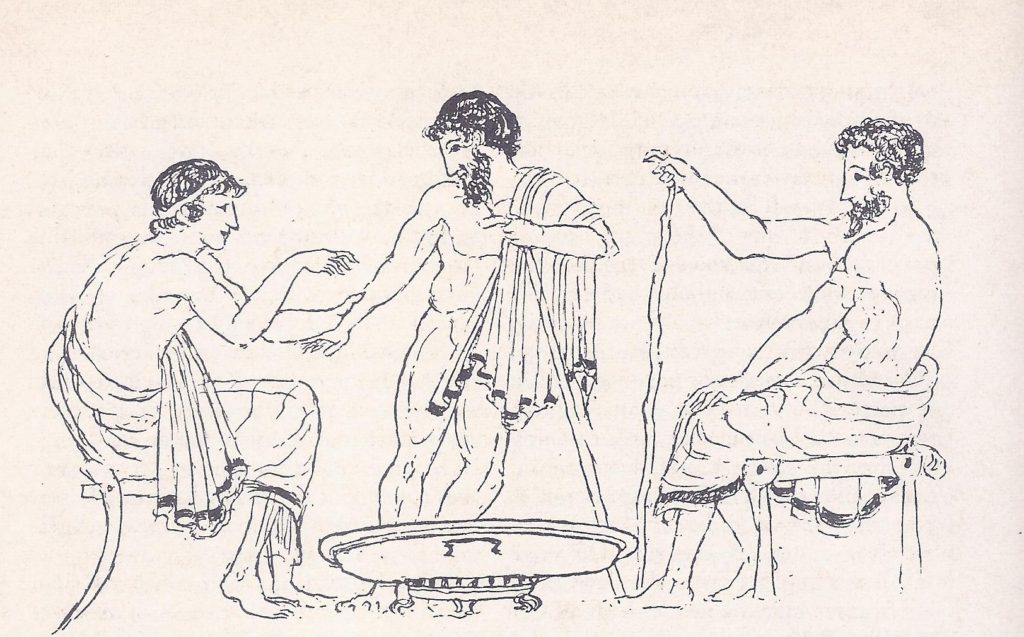
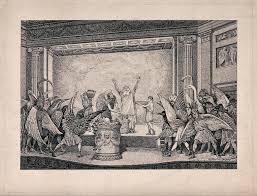

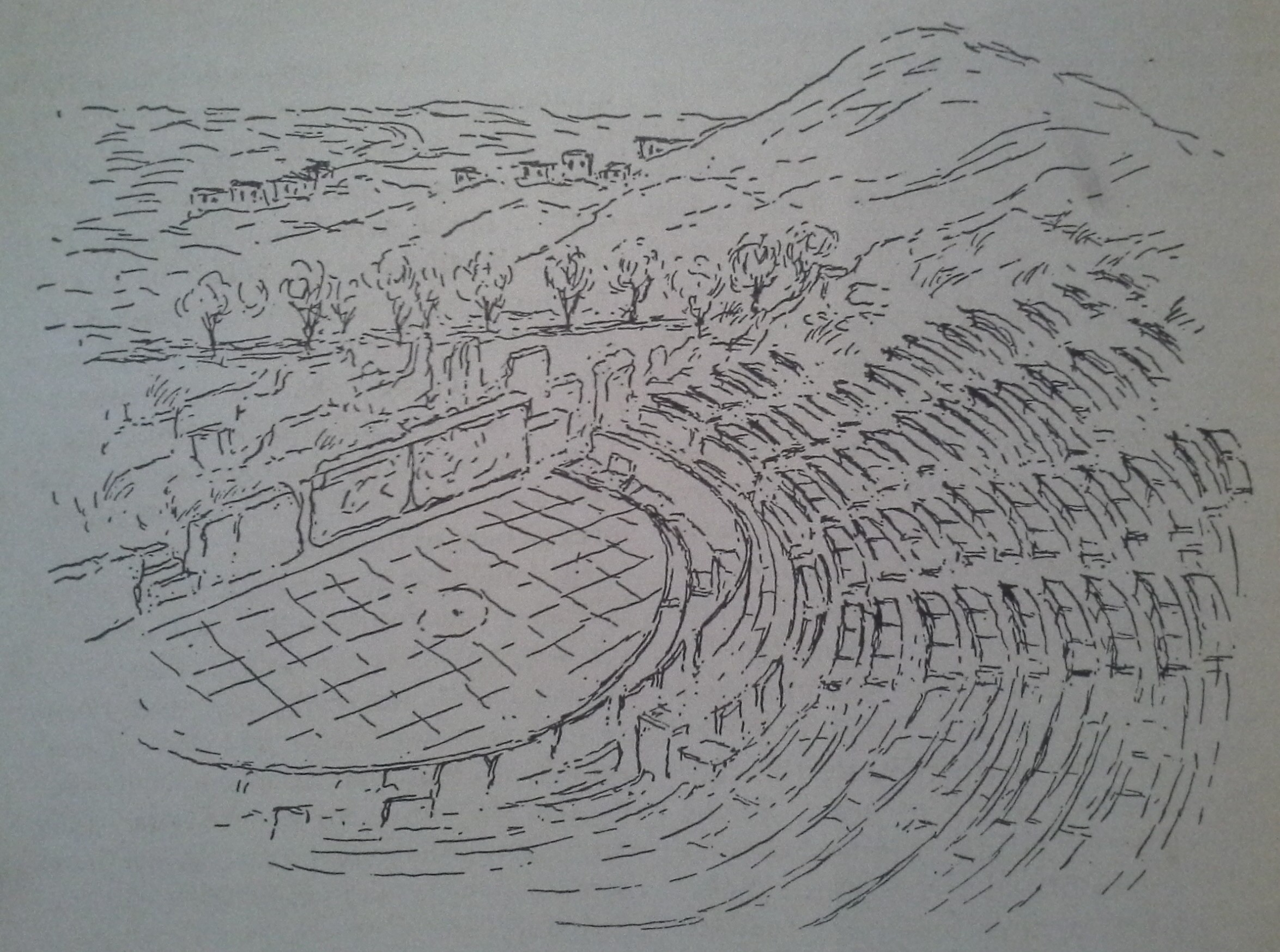
Play-acting had been developing at Athens since Peisistratus had introduced the Dionysia and the Panathenaea festivals; but to call it play-acting in the early stages gives a false impression. It was more like open air opera and ballet with a strong religious flavour. Originally there was a “chorus” of fifty men who chanted and danced in a dignified way. In the intervals an actor recited. Aeschylus added a second actor and the two actors, as well as conversing with each other, conversed with the chorus or its leader. All wore masks and impressive robes.
Several plays were performed one after the other and the performance lasted all day. Later there were three actors, each of whom could play more than one part and a chorus of only fifteen. There were plenty of female parts, but they were always played by men.
The little we know of the music makes it certain that we would have found it monotonous. It was usually provided by a man playing a kind of flute.
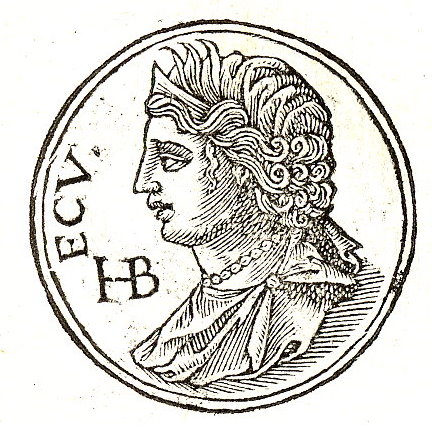
Aeschylus grew up to the sound of poetry, but none of it was Athenian. Homer was Ionian; Hesiod was a Boeotian; so was Pindar (c. 522-442), who wrote odes in honour of victors in the Olympic games. Sappho, the woman lyric poet (c. 600 B.c.), was a native of Lesbos. Simonides, was from Ceos. There were many others, from the islands, from the mainland and even from Sparta. Aeschylus, however, is the first great Athenian poet of whom we know.
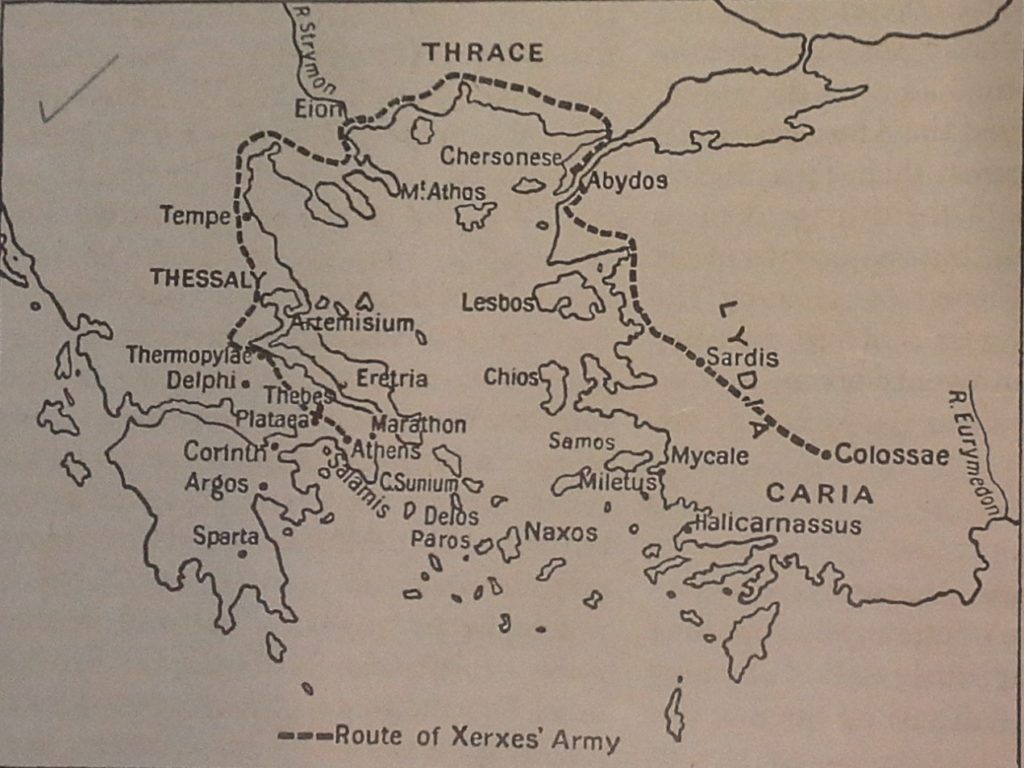
The Persians was exceptional among tragedies in dealing with recent history. The characters in most tragedies were drawn from legend or the distant past, but Aeschylus was interested in the sin of getting above oneself, of getting too big for one’s boots and the conduct of Xerxes was an excellent example of this.
Unfortunately neither Aeschylus nor Athens took the lesson to heart. At the Great Dionysia in 468, Sophocles, who had been only fifteen at the time of Salamis, won first prize in the drama contest; whereupon Aeschylus left Athens in disgust and lived in Sicily for some years, though he later wrote finer plays than ever (e.g. Agamemnon, 458).