The Olympic Games
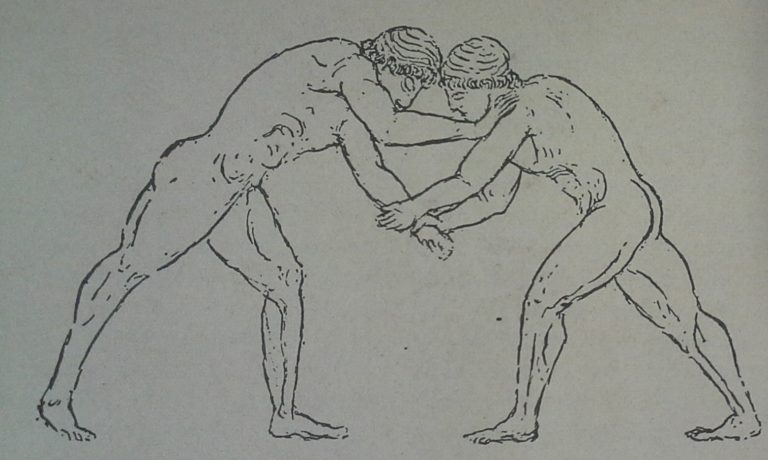
At Olympia every four years Olympic games were held in which any Greek was entitled to take part. It is not known when the first Olympic games were held, but they were said to have been revived in the year…
5000 Years of History. Wisdom. Heritage. Vision.
HELLENES AND GREEK HISTORY AT A GLANCE c3000 – 1400 Minoan Ages — Crete supreme. c1400 – 1100 Mycenaean Age — Mycenae and other Peloponnesian cities, inhabited by Achaeans, supreme. Sometimes called ‘Homeric Age’ because Homer, who lived much later, described it. c1100 – 800 Dark Ages — Dorian invasion. Greeks move into Ionia. Homer perhaps lived c 900. 800 – 600 Age of Colonisation — Colonies throughout Mediterranean and Black Sea. 776, First Olympic games. Delphic oracle gains influence. Spartan system established. 600 – 500 Sixth Century — Sometimes called the ‘Age of the Tyrants.’ Peisistratus at Athens. Solon and Cleisthenes found Athenian democracy. Philosophers and poets in Ionia and the islands. 500 – 400 FIFTH CENTURY DEFEAT OF PERSIANS (490, 480-479) ATHENIAN EMPIRE THE PERICLEAN AGE. FULL DEMOCRACY FOR ATHENIAN CITIZENS. WRITING OF HISTORY, TRAGEDY AND COMEDY. THE PARTHENON. SCULPTURE AND POTTERY. PELOPONNESIAN WAR (431-404). SOCRATES. 400 – 300 Fourth Century — Death of Socrates. Athens has lost her Empire, but her philosophers, orators and sculptors are famous. Greece submits to Philip of Macedon (338). Conquests of Alexander (332-323). c30 – 146 Hellenistic Age — Alexandria more important than Athens as centre of learning. Greece becomes part of Roman Empire(146). 146 B.C. – 328 A.D. — Greece part of Roman Empire. 328 – 1453 — Eastern Roman Empire or Byzantine Empire starting with founding of Constantinople. 1453 – 1821 — Greece under Turkish rule. War of Independence begins (1821). 1832 — Greece an independent kingdom. SOME PERSIAN KINGS Cyrus the Great (549 – 529) — First King of Persia. Conquered Croesus. Darius the Great (521 – 486) — “Remember the Athenians”. Xerxes I (486 – 465) — Second invasion of Greece. Artaxerxes II (45 – 362) — The “March-up Country”. Darius III (336 – 330) — Last King of Persia. Defeated by Alexander.
At Olympia every four years Olympic games were held in which any Greek was entitled to take part. It is not known when the first Olympic games were held, but they were said to have been revived in the year…
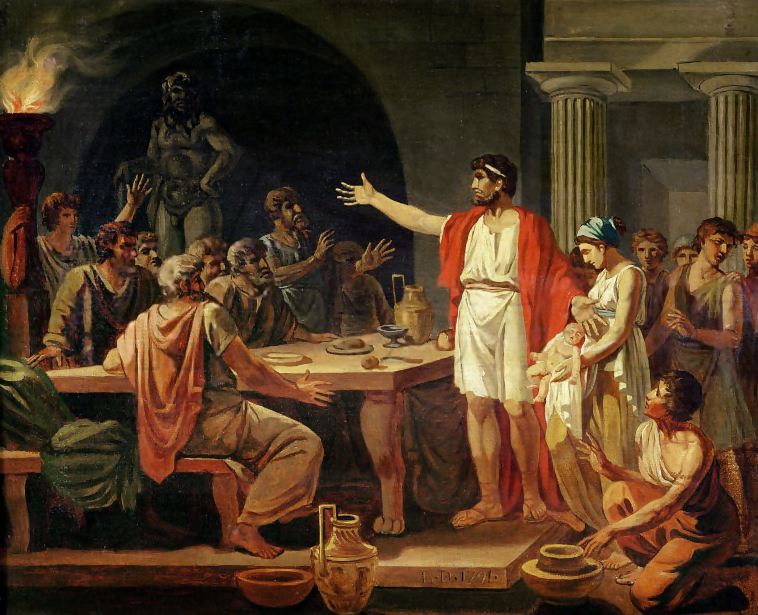
This striking difference in the way Athens and Sparta treated their victorious athletes reflects a striking difference between the states themselves. Neither was important as a coloniser. But during the 6th and 5th centuries they occupy the centre of the…
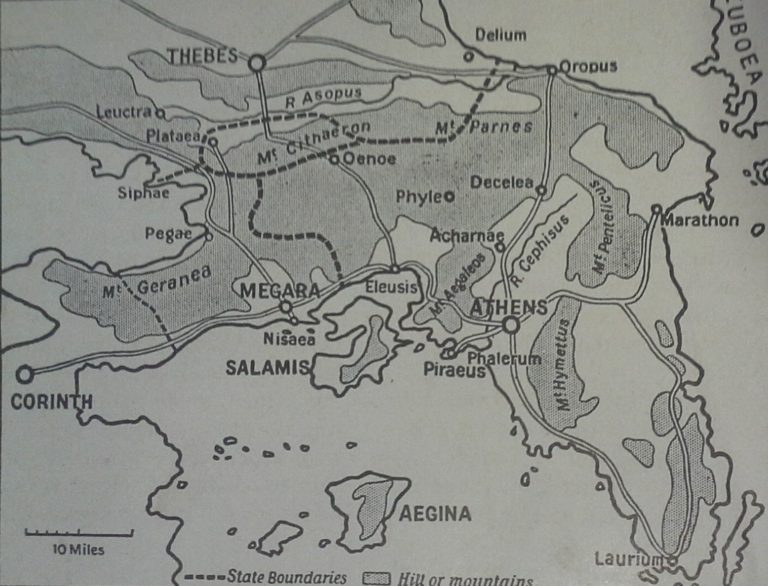
A Spartan child was examined at birth. A healthy infant was allowed to live. Weaklings were not wanted. They were left in the mountains to die. (Exposure of unwanted children was not peculiar to Sparta. Even civilized 5th-century Athenians practised…
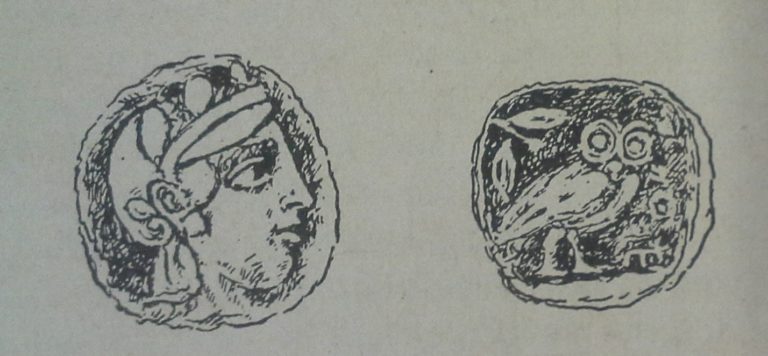
The legend of Theseus and the Minotaur suggests that Athens had dealings with Crete during the Minoan and Mycenaean Ages. We have no written history of that time, though the discoveries of archaeologists show that the Acropolis, a rocky mass…
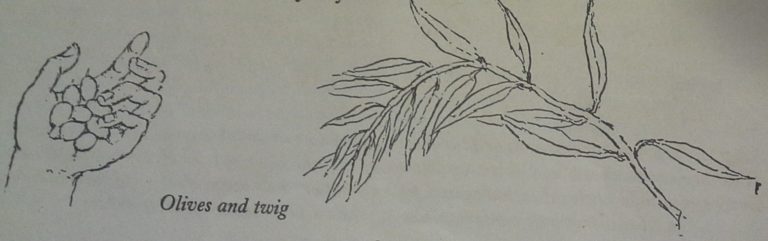
One of the young Athenians who must have taken a good deal of interest in Draco’s writing down of the laws was Solon. He came of a good family. His father had been extravagant and this had prompted Solon to…
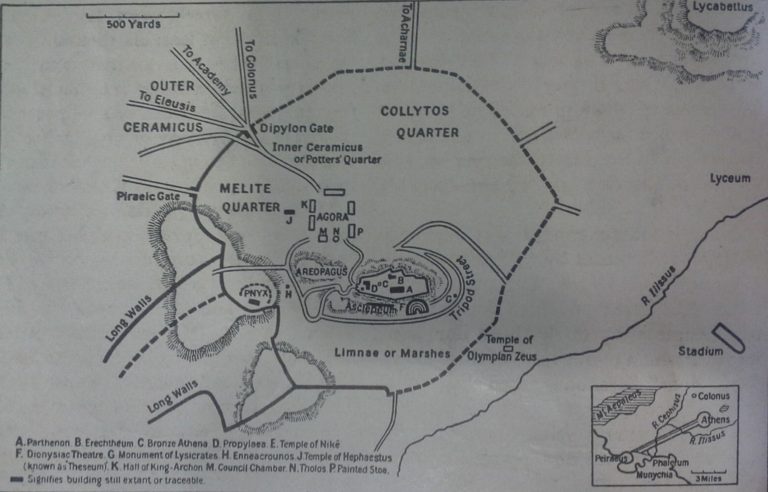
A tyrant’s first problem was to seize power. Peisistratus had to solve this problem three times. In 560 he came before a meeting of the Assembly wounded and bleeding, alleging that his political opponents had attacked him. Sympathisers voted him…
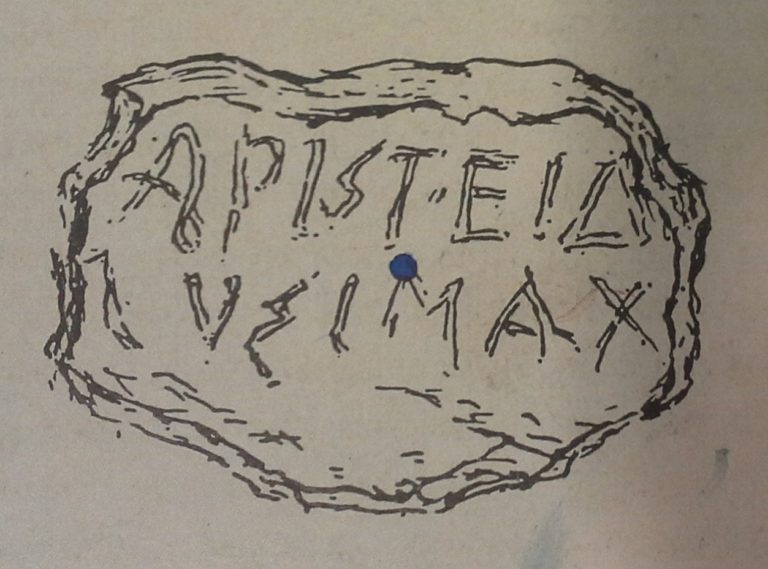
The heroism of Harmodius and Aristogeiton was a myth, but Athenian democracy was not. In the two great wars of the fifth century — the Persian and the Peloponnesian — the Athenians clearly felt they had what would now be…
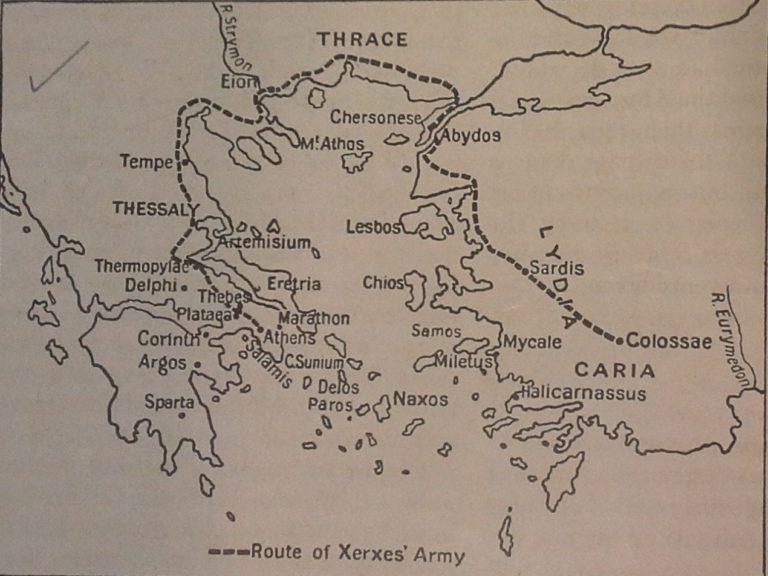
The Ionian Greeks, who lived on the coast of Asia Minor and the adjoining islands, had produced some of the leading poets and thinkers of the Greek world. Thales of Miletus (640-546 B.C.) predicted an eclipse of the sun and…
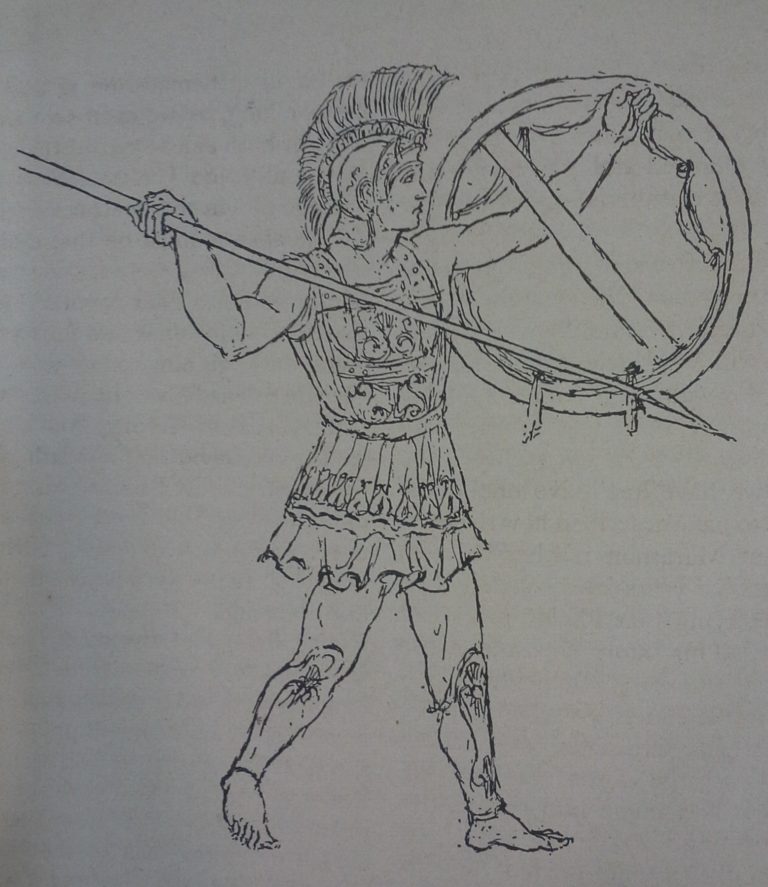
Both Sparta and Athens were determined to fight, — so determined that they had behaved outrageously towards Persian ambassadors who had visited them to demand submission. The traditional way of doing this was to ask for “earth and water” but…