The Coming of Man
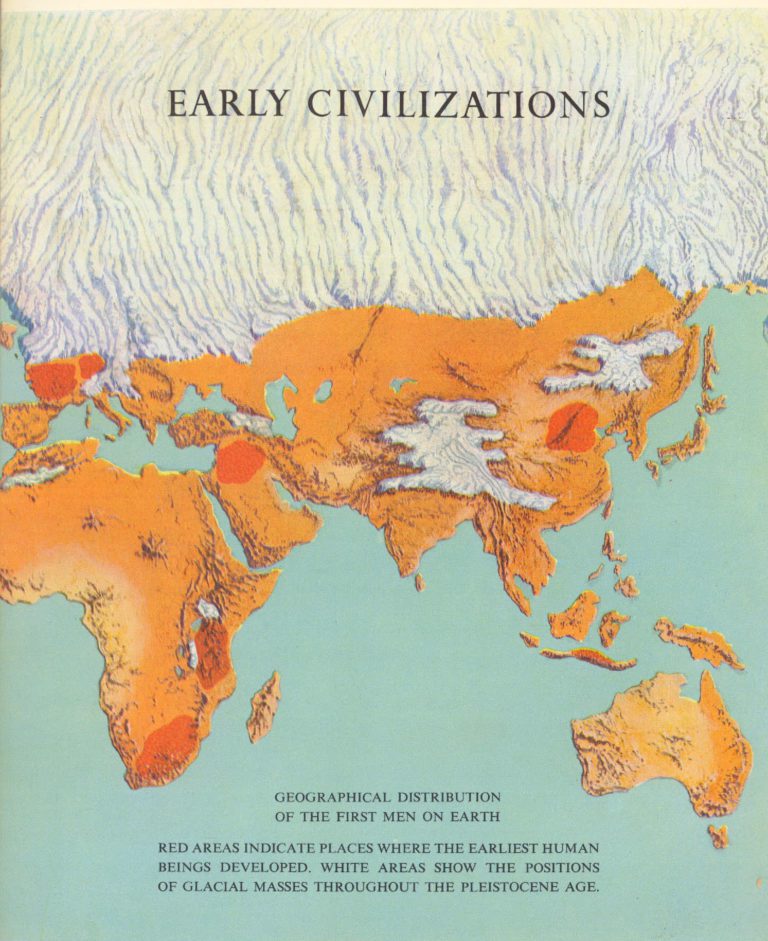
About 400,000 years ago, a group of people were gathered at the mouth of a cave. They had a fire in which they were roasting deer meat and around them lay the bones of monkeys, wild pigs and water buffalo…
5000 Years of History. Wisdom. Heritage. Vision.
Important events of early civilizations 400,000 B. C. to 689 B. C. 400,000 B. C. Peking Man exists. 120,000 B. C. Appearance of Neanderthal Man. 40,000 B. C. Appearance of Homo Sapiens. 8000 B. C. Mesolithic Age begins. 4000 B. C. Bronze Age, early civilizations, begin. Agriculture communities begin to develop in China. Eridu is founded near the Euphrates River. 3500 B. C. Settlements and early civilizations established in the Indus River Valley. 3200 B. C. Egypt is united under Narmer. 2600 B. C. Pyramid of Khufu is built. 2370 B. C. Sargon becomes the ruler of Sumer and establishes the Akkadian Empire. Trade and commerce flourish. 2000 B. C. Rice is introduced in China. 1790 B. C. Hammurabi becomes king of Babylon and establishes order and a system of laws. 1730 B. C. The Hyksos take power in Egypt. 1650 B. C. The Israelites settle in the land of Goshen. 1500 B. C. Shang Dynasty rules vast portions of China. Mohenjo-Daro, the early capital of India is destroyed by invaders. Queen Hatsheput rules in Egypt. 1483 B. C. Thutmose III conquers Syria and Sudan. 1380 B. C. Anyang becomes the capital of Shang Dynasty. 1375 B. C. Suppiluliumas I becomes king of the Hittities at the height of their power. 1370 B. C. Amenhotep IV (Akhnaton) takes the throne of Egypt with his wife Nefertiti. 1354 B. C. Tutankhamon becomes ruler of Egypt. 1290 B. c. Ramses II becomes ruler of Egypt. 1286 B. C. The Hittites defeat the Egyptians in the Battle of Kadesh. 1200 B. C. Picture writing emerges in China. 1025 B. C. The Chou Dynasty rules China. 1000 B. C. Hinduism is introduced into India. 930 B. C. Israel established. 705 B. C. Death of Sargon, ruler of Assyria. 689 B. C. Sennacherib of Assyria destroys Babylon. 2. Important events of early civilisations 648 B. C. – A. D. 220 648 B. C. Ashurbanipal builds the library at Nineveh. 600 B. C. The religion of Zoroaster spreads throughout Persia. The Upanishads are completed. 597 B. C. The leaders of Israel are held captive in Babylon. 560 B. C. Buddha (Siddhartha Gautama) is born. 550 B. C. Cyrus the great founds the Persian Empire. Confucius is born. 540 B. C. Birth of Mahavira, whose attempt to reform Hinduism gave rise to the Jainist movement. 530 B. C. Death of Cyrus the Great. 525 B. C. Under Cambyses, son of Cyrus, Persia conquers Egypt. 521 B. C. Darius, “king of kings,” takes the throne of Persia. 500 B. C. Greeks in Asia revolt but are put down by Darius. 490 B. C. A Persian attack on European Greece fails after the defeat at the battle of Marathon. 483 B. C. Death of Buddha. 480 B. C. Xerxes, Darius’ successor, continues the war against Greece; he wins in at Thermopylae and takes Athens, but his fleet is destroyed at the battle of Salamis. 465 B. C. Xerxes is assassinated. 359 B. C. Artaxerxes III becomes king of Persia. 334 B. C. After subduing and uniting the Greek cities, Alexander the Great crosses the Hellespont to attack the Persian Empire. 333 B. C. Alexander defeats the Persian army at Issus; Darius sues for peace and then flees. 327 B. C. Alexander the Great conquers India. 323 B. C. Alexander dies at Babylon. 269 B. C. King Asoka brings most of India under his rule. 230 – 221 B. C. Golden Age of Philosophy in China. 222 B. C. Shih Huang gains control of China and encourages trade. Chandragupta founds the Gupta Dynasty and rules in India. 213 B. C. The Great Wall of China is completed. 206 B. C. The Han Dynasty is founded in China. 100 B. C. Buddhism reaches China and rapidly spreads among the lower classes. 220 A. D. The Chinese Empire is split into three separate kingdoms.
About 400,000 years ago, a group of people were gathered at the mouth of a cave. They had a fire in which they were roasting deer meat and around them lay the bones of monkeys, wild pigs and water buffalo…
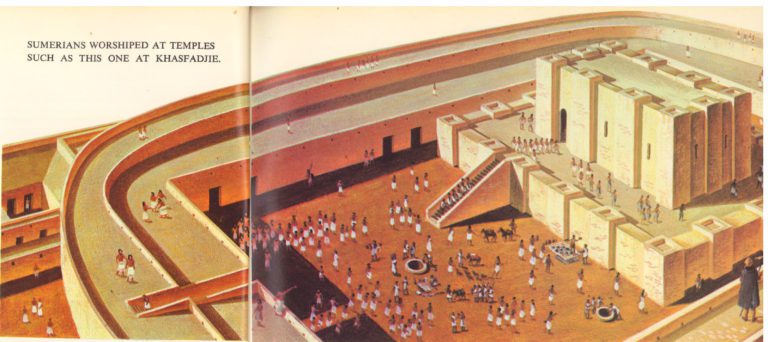
Mesopotamia is where civilization began. By 4000 B. C., many different groups of people were working out their lives in a variety of ways. In a great arc from the eastern coast of the Mediterranean, across the Turkish plains and…
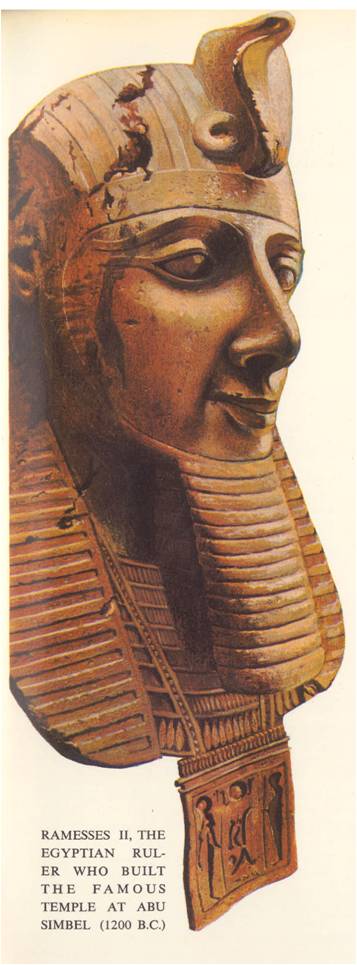
It was around 3500 B.C. and as it did every year around the middle of July, the Nile had begun to rise. Carrying tons of soil, the waters poured down from the mountains of Africa, where the rain and melting…
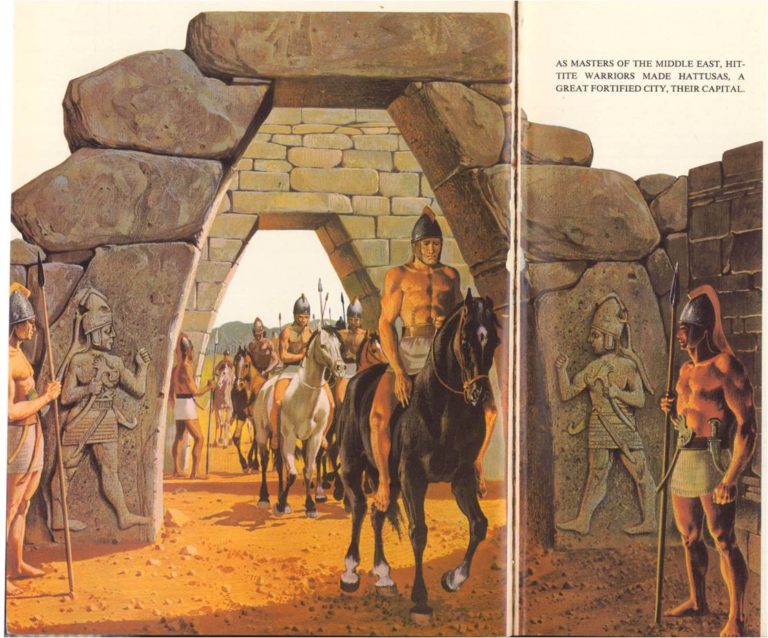
Within 150 years of the death of Hammurabi, the cities of Mesopotamia were powerless and other peoples took up the struggle for the Near Eastern world. Among them were the Hittites, who had taken the city of Babylon. The rough…
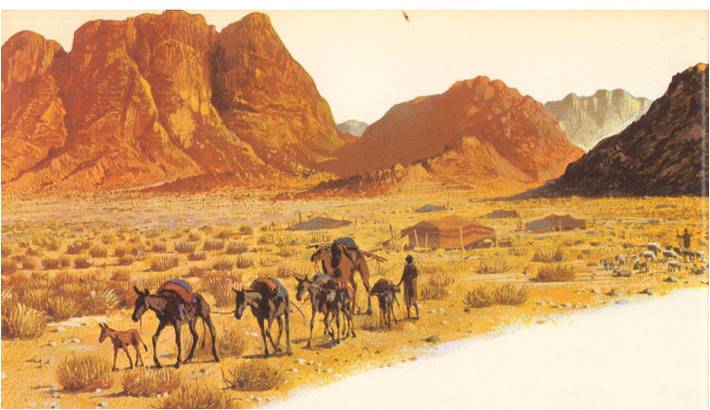
On the plains of Mesopotamia, a young man stood gazing up at the stars that glittered from the dark sky of night. He was Abraham, a native of the Sumerian city of Ur. Abraham was a Hebrew, one of the…
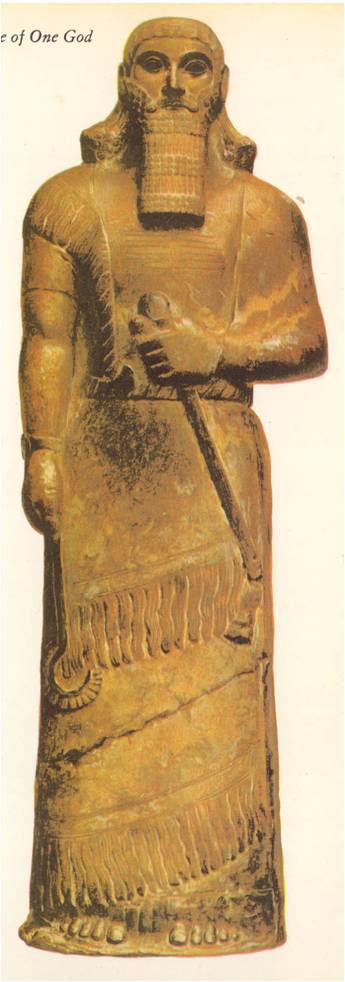
During the century after the Hittites had raided Babylon and rose to power in Turkey and Syria, Mesopotamia was a divided unproductive land. In the south, Babylonia fell under the rule of foreigners, first the Kassites from the northeast and…
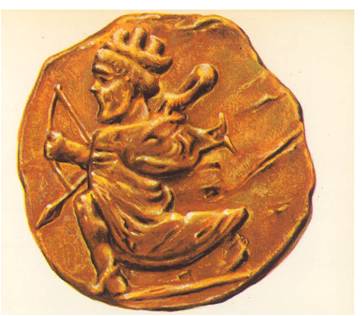
BABYLON, the final capital of Mesopotamia civilization, had fallen to warrior tribesmen from the east, the Medes and Persians. The Medes and Persians were descended from the Aryan peoples who for centuries had been moving out of the grasslands of…
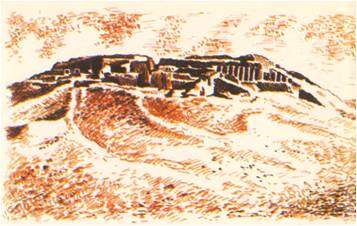
For thousands of years during the Stone Age, only scattered groups of people had lived in India. With only the simplest tools of bone, wood and stone, they hunted and gathered food. Cut off from other peoples by the mountain…
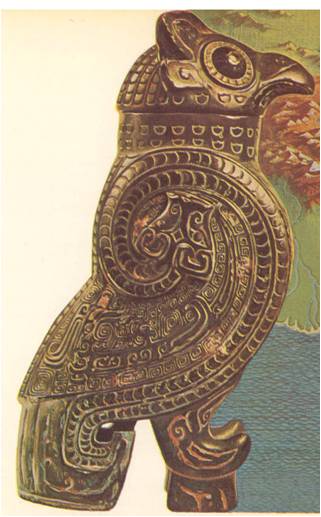
For many generations, the ancestors of P’an Keng had considered themselves kings in northern China. Yet this family of kings, the Shang Dynasty, had never governed from a central capital. About 1380 B. C., P’an Keng decided it was time…