The Final Break 1776
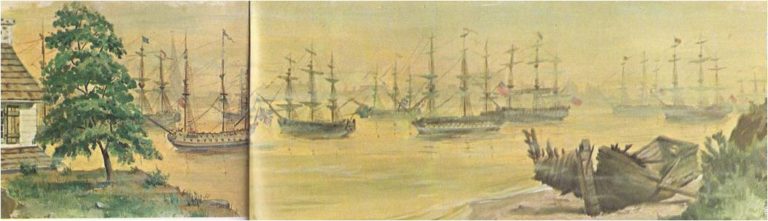
The fog was lifting over New York early on the morning of June 29, 1776, when a man named Daniel McCurtin happened to glance out over the bay. At first he saw nothing but mist hanging low over the water…
5000 Years of History. Wisdom. Heritage. Vision.
IMPORTANT DATES AND EVENTS IN THE AGE OF REVOLUTION, 1765 – 1791 The American Revolution 1765 The British try to raise money by requiring tax stamps on documents; the colonies protest. 1766 The Stamp Act repealed. 1767 The Townshend Acts impose taxes on imported goods; unrest continues in the colonies. 1770 British troops open fire on a crowd in the Boston Massacre; The Townshend Acts repealed. 1772 A mob burns the British coast guard ship Gaspee; Sam Adams starts the first committee of correspondence in Boston. 1773 Boston patriots dressed as Indians destroy three shiploads of tea in the Boston Tea Party. 1774 In reprisal for the Tea Party the British blockade Boston; the first Continental Congress meets in Philadelphia to consider ways of protesting. 1775 The revolution begins as minutemen fire on British troops at Lexington and Concord; Washington becomes commander-in-chief; British win the battle of Bunker Hill but suffer heavy losses. 1776 British troops evacuate Boston; Congress adopts the Declaration of Independence; Washington crosses the Delaware and defeats the Hessians at Trenton. 1777 The British are defeated in battles at Princeton, Bennington and Saratoga. 1778 France enters the war on the colonists’ side; Lafayette joins Washington’s army. 1781 Washington and a French fleet trap Cornwallis at Yorktown; his surrender ends the war. 1783 Britain recognizes American independence by the Treaty of Paris. The French Revolution 1787 The Assembly of Notables meets; Lafayette demands that the king call the Estates General. 1789 The Estates General meets but the Third Estate declares itself a National Assembly and begins to write a constitution; Parisians storm the Bastille, arm themselves and force the king to return from Versailles to Paris. 1791 The king is captured while trying to flee Paris and begin a counterrevolution and is returned to his palace in Paris. IMPORTANT DATES AND EVENTS IN THE AGE OF REVOLUTION, 1792 – 1815 1792 Austria and Prussia form an alliance against France; the king is arrested and France declared a republic; the Assembly calls a National Convention. 1793 The king is tried and executed for treason; England, Spain and Holland join the alliance against France; Robespierre gains power; the reign of terror begins. 1794 The Terror continues until a coup by moderates brings about the fall of Robespierre and suppression of the political rights of the Jacobins. 1795 The White Terror against radicals begins; Prussia withdraws from the war against France. 1796-1797 Napoleon Bonaparte leads a French army into Italy and defeats the Austrians. 1798-1799 Hoping to cut England off from India, Napoleon lands in Egypt. 1798 England and Russia form a new alliance against France and are later joined by Austria. 1799 Napoleon returns from Egypt and overthrows the Directory, becoming the first consul and dictator. 1802 Peace with England; Napoleon becomes consul for life. 1803 England again declares war on France. 1804 Napoleon is crowned emperor of the French. 1805 Austria, Russia, Sweden declare war on France; Nelson destroys the French fleet at Trafalgar; Napoleon defeats the Austrian and Russian armies at Austerlitz; Austria makes peace with France. 1808 Napoleon invades Spain and makes his brother king; the Spanish, aided by England, revolt. 1809 Austria declares war on France; Napoleon defeats them and captures Vienna. 1812 Napoleon’s invasion of Russia ends in a retreat in which most of the army is lost. 1813 Prussia and Austria declare war on France. 1814 The allies invade France and capture Paris, exiling Napoleon to the island of Elba. 1815 Napoleon lands in France and raises an army; he is defeated at Waterloo and exiled to St. Helena, where he later dies.
The fog was lifting over New York early on the morning of June 29, 1776, when a man named Daniel McCurtin happened to glance out over the bay. At first he saw nothing but mist hanging low over the water…
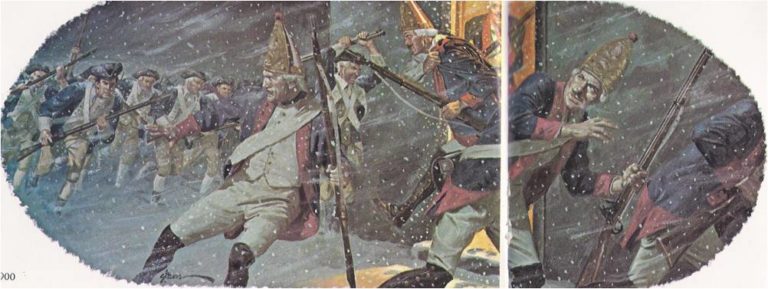
The cold winter winds howled through the streets of New York, but the houses were filled with warmth, good cheer and the merry crackle of hearth fires. It was late in December of 1776. Six months earlier the city had…
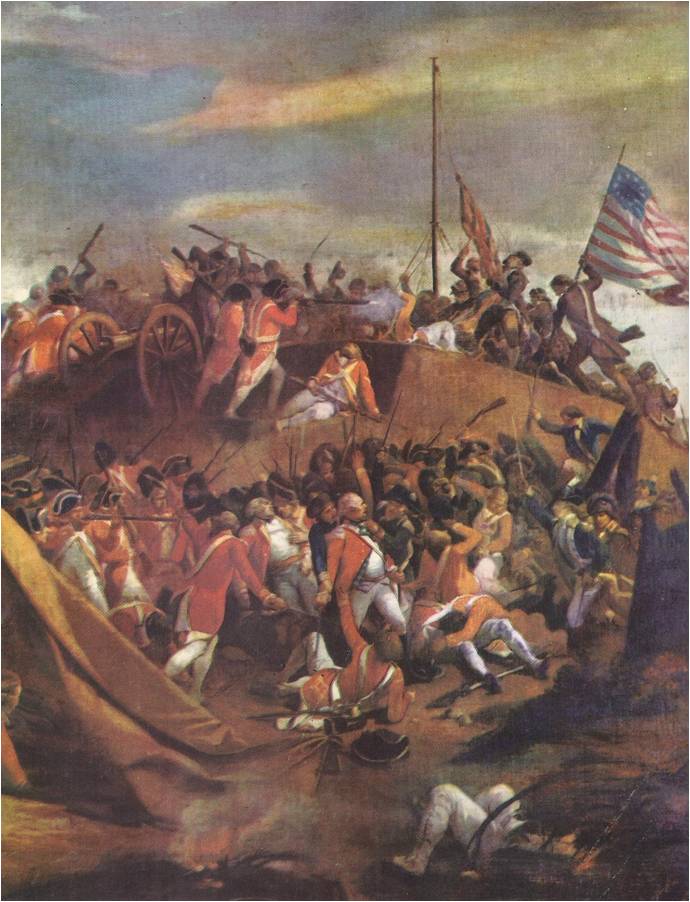
The big English setter did not look like a stray dag. When it came wandering into Washington’s camp one day in the fall of 1777, a soldier brought it to his officer. The officer took it directly to Washington’s headquarters…
WHEN THE MARQUIS DE LAFAYETTE returned to France in 1782, after taking part in the American Revolution, he was hailed as a popular hero. It was pleasant to be welcomed as a champion of liberty, but he had been in…
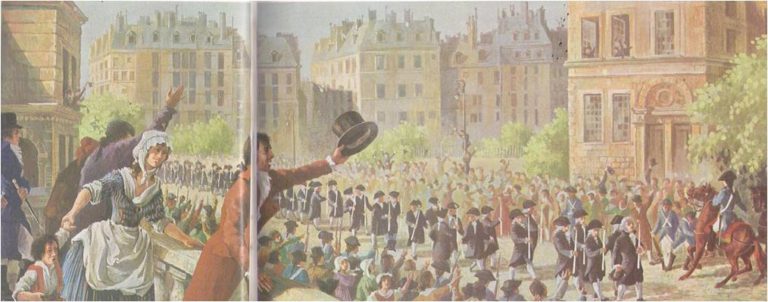
The sun had broken through the clouds after a night of spring showers. Dripping leaves sparkled in the golden light, which flooded the gaily decorated streets of Versailles and the broad terraces of the king’s royal palace. It was May…
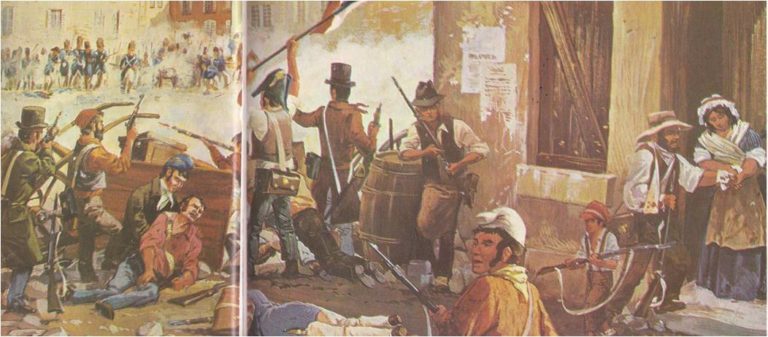
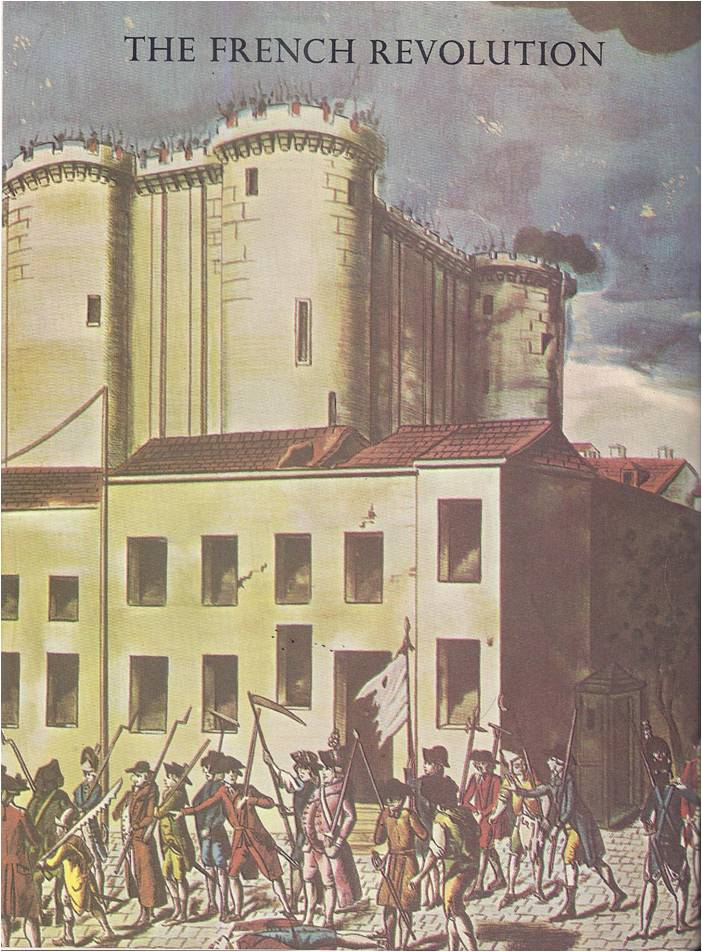
On Sunday, July 12, 1789, the people of Paris learned that Necker, the popular minister, had suddenly been dismissed by the king. They could only guess at the king’s reasons for wanting Necker out of the way. It seemed clear…
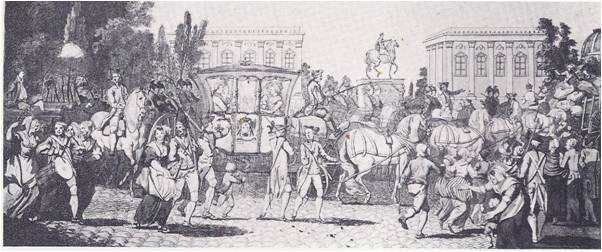
In the towns and cities of the provinces, the news of the fall of the Bastille led to wild celebrations and a series of revolts against local governments. These governments had long been unpopular, since most of them were controlled…
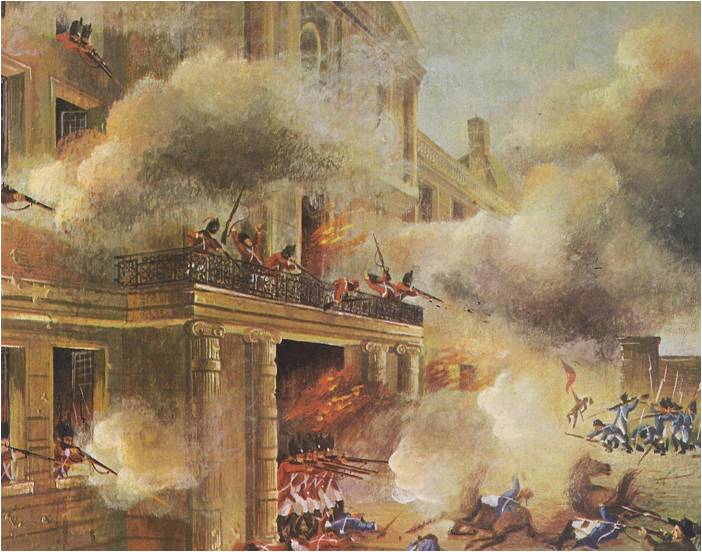
“Down with the King!” That cry was heard again and again on the night of August 9, 1792, as restless mobs gathered in the streets of Paris. They had only one purpose in mind and that was to make certain…
The execution of the king stunned the rulers of Europe. They were stunned as well by the French military victories in Belgium and along the Rhine River. Furthermore, the French government was offering to come to the aid of any…