Adventures in the New World 1519 – 1620
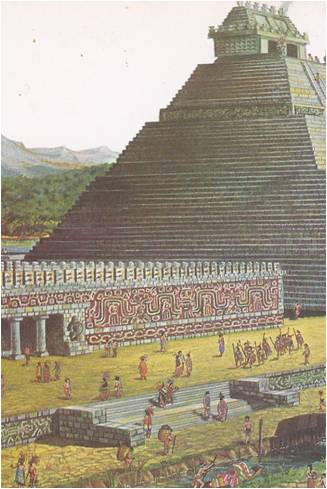
“I DID NOT come to till the soil like a peasant,” said Hernando Cortez. “I came to find gold.” His words echoed the thoughts of almost every Spaniard in the New World. The discovery of the sea route to the…
5000 Years of History.Wisdom. Heritage. Vision.
REFORMATION HISTORY, IMPORTANT EVENTS IN THE REFORMATION AND AGE OF EXPLORATION, 1415 – 1532
1378 John Wyclif publishes a work calling for church reforms and begins to translate the Bible into English.
1415 The Portuguese defeat a Turkish fleet at Ceuta, opening the way to Africa; Jan Hus, influenced by Wyclif, is condemned as a heretic and burned at the stake.
1418 Prince Henry of Portugal founds a school for mariners.
1432 Portuguese explorers discover the Azores.
1434 Portuguese sailors explore the west coast of Africa.
1487 Diaz discovers the Cape of Good Hope for Portugal.
1492 Christopher Columbus sails west and discovers America.
1497 Vasco da Gama sails to India by way of the coast of Africa.
1498 John Cabot explores the coast of North America for England.
1505 Martin Luther, a young student, becomes a monk.
1506 Death of Columbus.
1513 Ponce de Leon discovers Florida; Balboa reaches the Pacific.
1516 Martin Luther preaches a sermon attacking indulgences.
1511 Luther posts his 95 theses questioning the power of the pope to grant indulgences, on the church door in Wittenberg, Germany.
1519 Luther defends his theses in a debate with Johann Eck; Magellan sets out from Portugal to sail around the world; Cortez invades Mexico and conquers the Aztec kingdom for Spain.
1520 The pope excommunicates Luther, who writes a pamphlet in reply.
1521 The Diet of Worms, under pressure from the pope, declares Luther a heretic and banishes him.
1524 Peasants in Germany revolt expecting help from Luther, but he condemns them.
1521 Henry VIII of England petitions the pope to annul his marriage to Catherine of Spain; the pope, under pressure from the emperor, puts off any answer.
1529 Luther meets with Zwingli, the Swiss Protestant, but they are unable to agree on doctrine.
1532 Pizarro conquers Peru for Spain; England stops paying tribute to the pope.
IMPORTANT EVENTS IN THE REFORMATION AND AGE OF EXPLORATION, 1534 – 1634
1534 Parliament passes the Act of Supremacy making the king head of the church and breaking with Rome; Ignatius Loyola founds the Society of Jesus, or Jesuits.
1535 Mercator’s map of the world names the new territories America after Amerigo Vespucci; Pizarro founds the city of Lima, Peru.
1536 John Calvin comes to Geneva and begins to govern the city by the principles of his religion.
1539 De Soto explores the Gulf coast and discovers the Mississippi.
1540 The pope recognizes the Jesuits; Coronado explores western North America.
1542 The pope founds the Roman Inquisition to examine heretics.
1545-1563 The Council of Trent meets to consider reforms of the Catholic Church.
1546 Death of Martin Luther.
1547 Death of Henry VIII.
1553 Mary becomes queen of England, restores ties with the pope and wages a campaign of terror against Protestants.
1558 Elizabeth becomes queen and re-establishes Protestantism; death of Ignatius Loyola, the Jesuit.
1564 Death of John Calvin.
1568 Dutch Protestants begin a revolt against rule by Catholic Spain.
1572 Protestant Huguenots in Paris are slaughtered by Catholics in the St. Bartholomew’s Day Massacre.
1585 The Roanoke colony, first English settlement in North America, is founded by Walter Raleigh.
1588 Spain attempts to invade England, overthrow Elizabeth, and restore Catholicism with the Armada, but is defeated by Drake and the English navy.
1607 The Jamestown colony in Virginia is settled.
1608 Champlain builds a French trading post at Quebec and discovers Lakes Champlain‚ Huron, and Ontario.
1609 Henry Hudson discovers the Hudson River and Hudson‘s Bay.
1620 Puritans on the way to Virginia on the Mayflower land by mistake in Massachusetts and build a settlement there.
1624 Dutch settlers found the town of New Amsterdam, which later becomes New York.
“I DID NOT come to till the soil like a peasant,” said Hernando Cortez. “I came to find gold.” His words echoed the thoughts of almost every Spaniard in the New World. The discovery of the sea route to the…
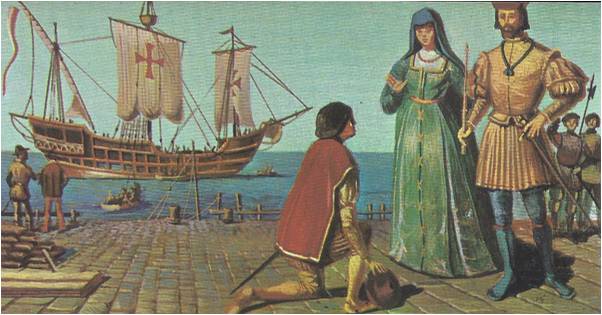
ALONG THE DUSTY SPANISH road leading north from Granada plodded a mule. On its back, bouncing and cursing his luck, sat a glum Italian sea captain. Four years before, Captain Cristobal Colon — the English would call him Christopher Columbus…
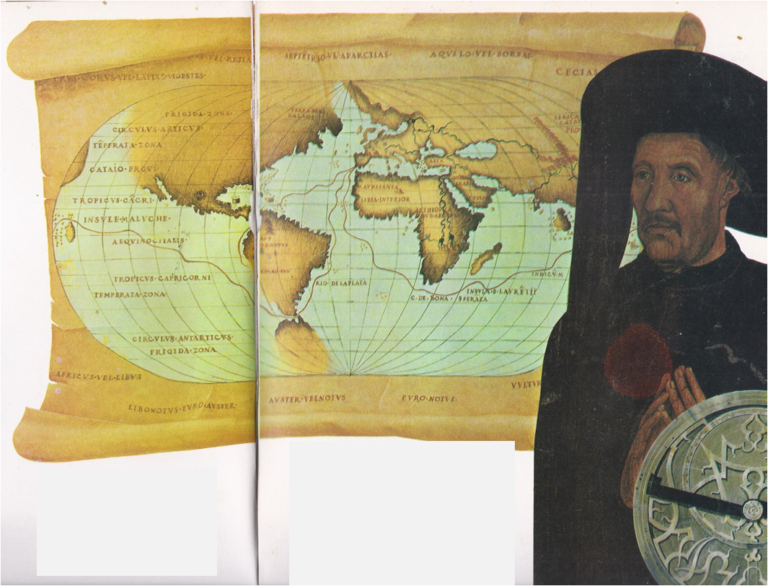
IN 1415, WHEN ALL OF CHRISTENDOM belonged to one church and Christians battled pagan Turks instead of one another, a force of Portuguese marines set sail for the coast of Africa. They planned to attack a town called Ceuta. A…
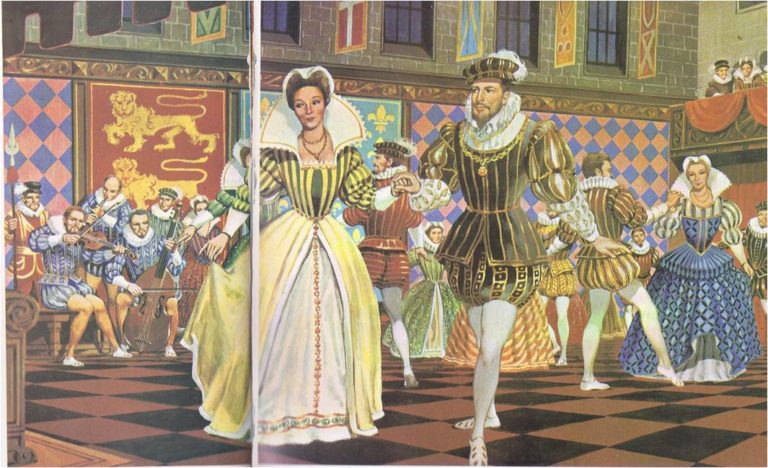
OF ALL THE RULERS OF EUROPE, none was more eager to please the pope, more anxious to prove himself a loyal son of the Church, than Henry VIII, the handsome young monarch of England. Henry was one of the first…
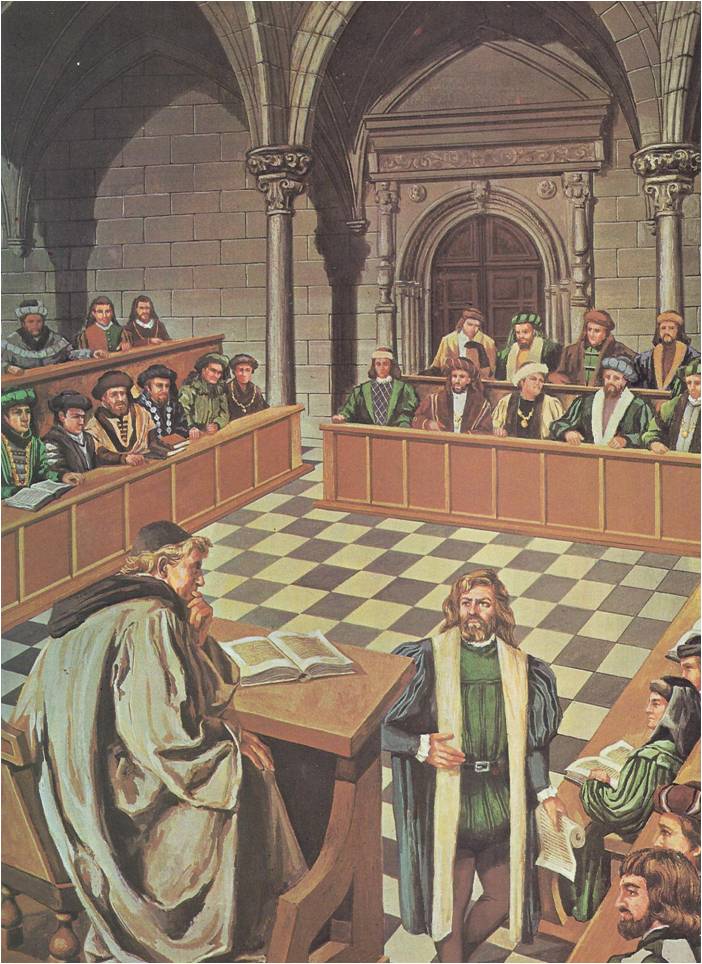
THE BLAST OF MUSKETS and the clang of swords against armour echoed across the plains of Italy, Spain and the Lowlands. Warriors of the king of France were clashing with the Spanish infantry and German knights of the Holy Roman…
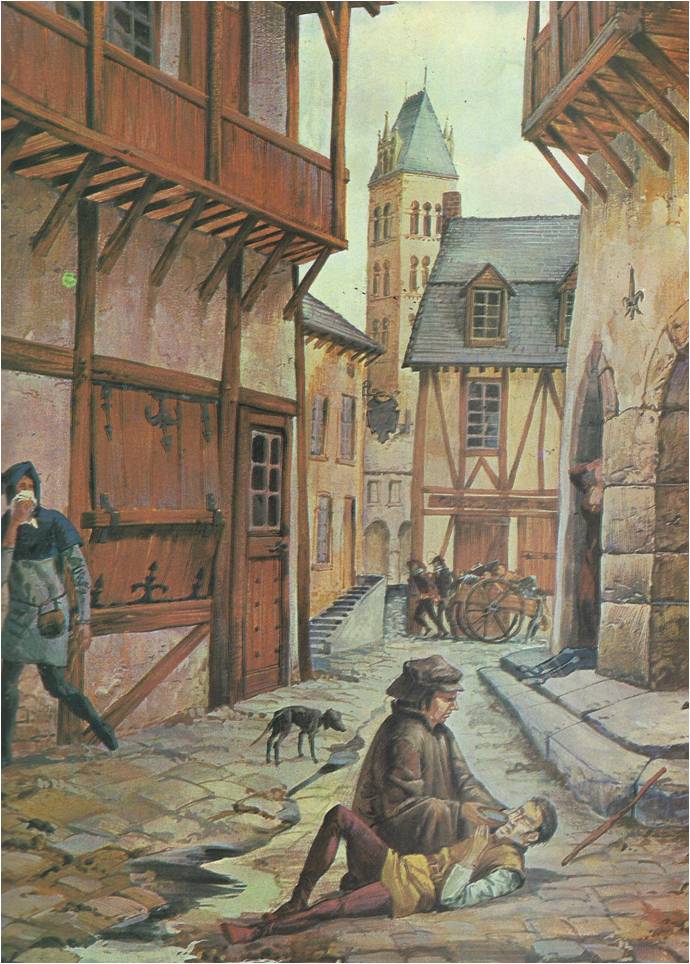
IN 1518, AN INDULGENCE PEDDLER, a priest from France, made his way through one of the twisting Alpine passes that led into Switzerland. He carried with him a supply of bright banners, an impressive-looking copy of Pope Leo’s Declaration of…
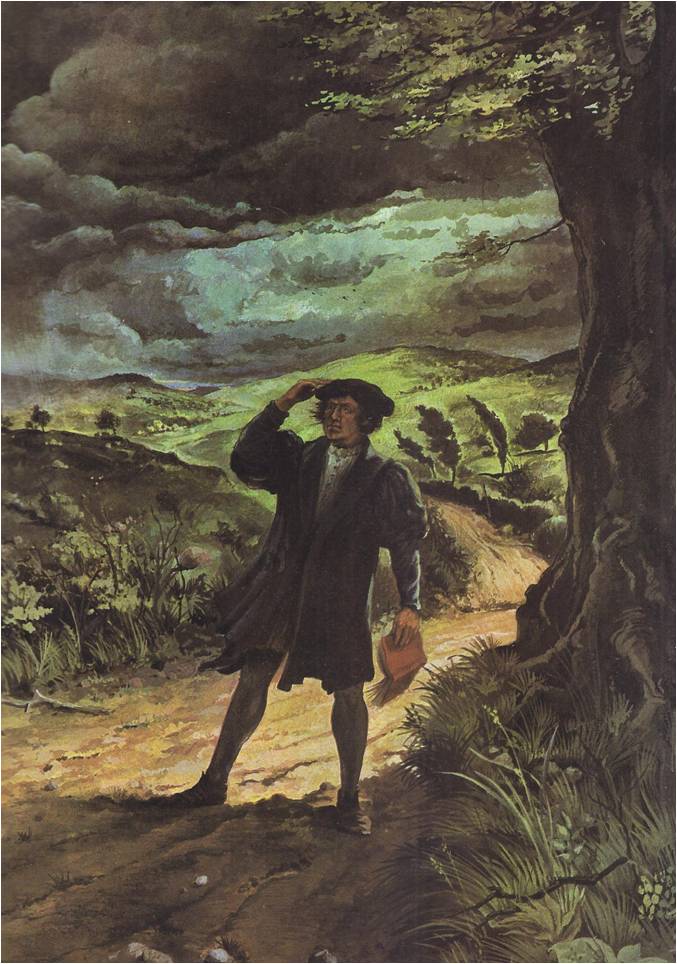
ON A SULTRY JULY DAY IN 1505, a young law student, Martin Luther, was walking along a country road in Germany when a summer storm blew up. The air grew heavy and black clouds filled the sky. Before Luther could…
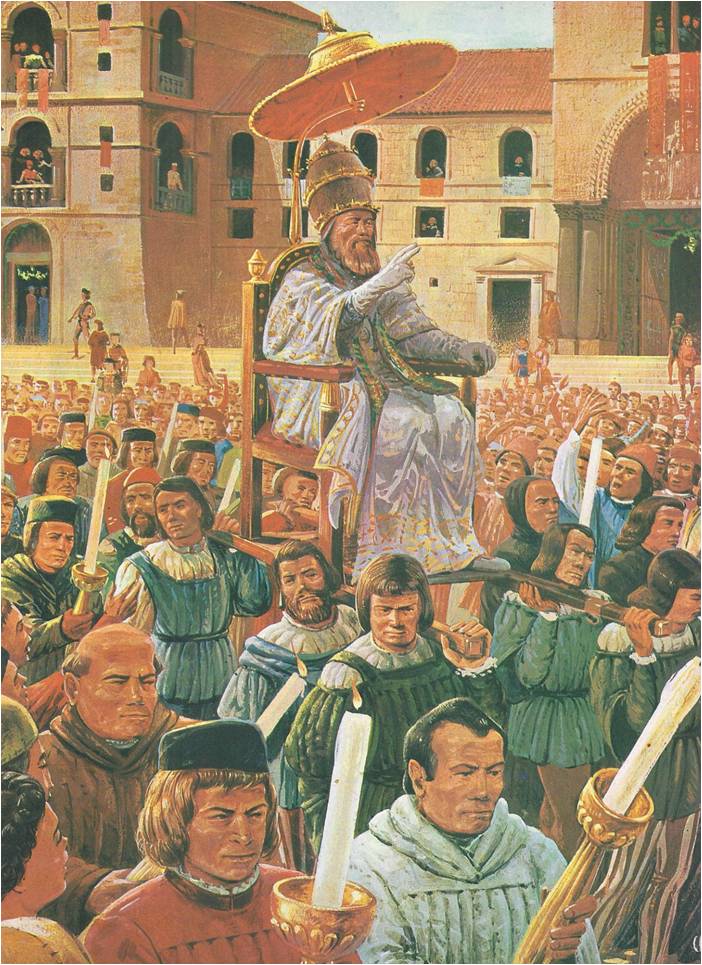
IN THE MIDDLE AGES, when knights fought wars in Europe’s fields, robbers roamed the roads and the dark forests seemed filled with unknown dangers, men put their trust in walls. Around each little town rose ramparts of massive stonework, a…