Early Civilization Spreads by Land and Sea
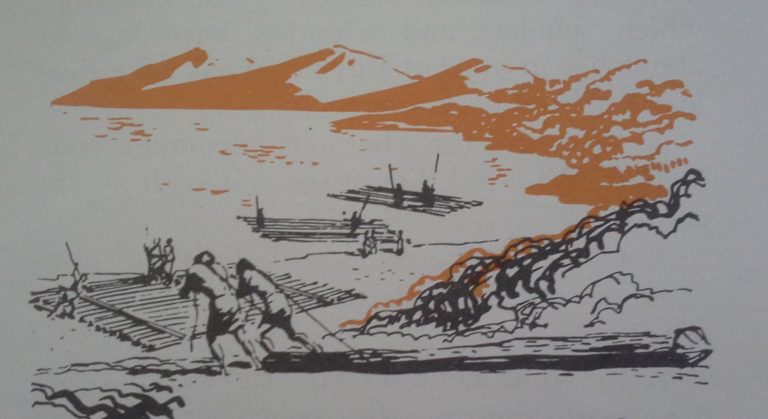
Now Hiram, King of Tyre, sent his servants to Solomon, when he heard that they had anointed him King. . . And Solomon sent word to Hiram, “ . . . I purpose to build a house for the name…
5000 Years of History.Wisdom. Heritage. Vision.
Distant past history and the world history is the story of man. The first part of this story stretches back into the distant past -to a time so long ago that men had not learned to write and therefore left no written records. The end of the story remains to be written, for we ourselves are part of it. Today’s events will be ancient history to our descendants in the remote future.
History tells of the beginnings of civilization describing man’s slow march from savagery to more advanced ways of living. It is a tale scientists have pieced together by studying slow changes in the earth itself or by examining remains left by early men -fragments of skeletons, crude tools, pieces of broken jugs, or cave paintings. For thousands of years human progress was painfully slow. Gradually, however, early men improved their weapons and implements, tamed animals and learned to plant crops. Each discovery made further progress easier, though peoples in a few areas advanced more rapidly than others.
History also relates to how great civilizations developed at an early time in Egypt and Mesopotamia. In fertile river valleys the ancient Egyptians and Mesopotamians learned better ways of producing food and goods. They set up strong central governments ruled by powerful kings, built huge buildings and made important scientific discoveries. Much of what we know of these early people comes from their own records — words cut in stone or clay, or written on rolls of what we would call paper.
History also tells how civilized ways of living spread from Egypt and Mesopotamia to nearby peoples. These in turn made new advances of their own, some of which have directly influenced later ages down to the present. The Israelites, for example, developed the belief in one God instead of many. In short, history tells us how early peoples laid the foundations of what we know today as “civilization.”
Click here to Reply or Forward
Now Hiram, King of Tyre, sent his servants to Solomon, when he heard that they had anointed him King. . . And Solomon sent word to Hiram, “ . . . I purpose to build a house for the name…
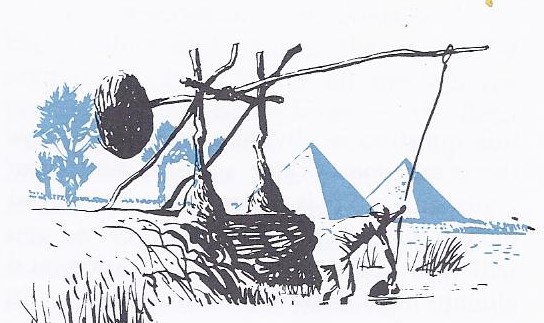
People satisfy their important needs in different ways. For example, most of you obtain water merely by turning on a faucet in your home. The water is pumped from large reservoirs and piped considerable distances before reaching your home. Many…
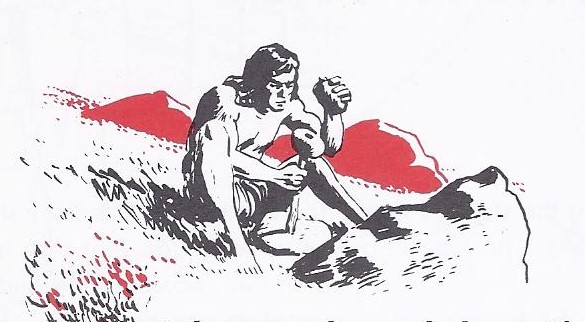
Perhaps you have asked yourself, “What would I have done?” as you have read an adventure yarn or the true story of some person set down in a wild and remote spot. One of the most famous stories in the…